
We’re pleased to share that OnePoint5Media, incorporating Innovators Magazine, has joined the UNESCO Media and Information Literacy (MIL) Alliance.
For us, this feels like a natural extension of the work we’ve been developing through both over the past decade — using journalism, publishing, conversations and creative projects to help make complex ideas more accessible and encourage people to engage with the issues shaping our future.
Media and information literacy matters enormously in a world where the volume, speed and complexity of information continues to grow.
We’re particularly interested in the space where media, education, innovation, young people and sustainability meet — and in creating opportunities for people to understand, question, share and contribute to important ideas.
Information shapes the way we understand the world. But in an increasingly complex media environment, knowing what to trust, what to question and how to participate has become something we all need to think about.
Every day, we encounter an extraordinary amount of information.
News stories, social media posts, videos, podcasts, research, advertising, political debate, expert opinion, personal experience — and increasingly content created or shaped by artificial intelligence.
Some of it informs us. Some of it challenges us. Some of it persuades us. Some of it entertains us.
And sometimes, it can be difficult to tell the difference.
That is why media and information literacy matters.
More than understanding the media
Media and information literacy is sometimes presented as something for schools, journalists or digital specialists.
It is much broader than that.
It is about giving people the knowledge, confidence and critical thinking skills to navigate the information around them — to ask where something came from, understand why it was created, recognise different perspectives and make informed decisions about what they read, watch, listen to and share.
It is also about participation.
Because being media and information literate isn’t simply about consuming information more carefully. It is about having the confidence to contribute, ask questions, tell stories, challenge assumptions and take part in conversations that matter.
In that sense, we all play a part.
The role of journalism
As journalists and publishers, there is a particular responsibility to make information accessible, accurate and meaningful.
But good journalism is not simply about delivering information.
It is also about creating context.
It is about asking questions, speaking to people with different perspectives, examining evidence and finding ways to communicate complex subjects without losing their meaning.
That has been central to our work at OnePoint5Media and through Innovators Magazine.
Over the years, we have worked across sustainability, innovation, education and emerging ideas, often speaking with researchers, entrepreneurs, policymakers, educators, creatives and young people.
A recurring challenge has been the same: how do we make important ideas understandable and give more people the opportunity to engage with them?
Everyone has a role
The responsibility doesn’t sit with journalists alone.
Educators help people develop the confidence to question and explore.
Researchers and experts have a role in communicating knowledge beyond their immediate disciplines.
Technology companies and digital platforms influence how information is discovered and shared.
Organisations and institutions have a responsibility to communicate openly and responsibly.
And each of us makes choices every day about what we believe, share and amplify.
Young people in particular are navigating an information environment that is changing at extraordinary speed. Giving them the tools not simply to consume information, but to create, question and participate, is an important part of preparing for the future.
Connecting people with better information
For us, this is where media and information literacy connects with something broader: human connection.
Information becomes more meaningful when people can discuss it, challenge it, put it into context and encounter perspectives different from their own.
That is one reason we have always been interested in creating spaces where people from different backgrounds and disciplines can meet around ideas — whether through journalism and publishing, workshops, innovation programmes, youth engagement or international initiatives.
The goal isn’t to tell people what to think.
It is to help create the conditions in which people can think, question, connect and contribute.
UNESCO MIL Alliance
We’re very pleased to become part of a global network committed to strengthening media and information literacy, and look forward to learning from and contributing to the Alliance community.
We look forward to learning from others, sharing our own experience and contributing where we can.
Because ultimately, media and information literacy isn’t just about media.
It is about people.
And in a world where information increasingly shapes how we understand one another and the future we share, we all have a part to play.
A new connection for OnePoint5Media — and an important one.
‘We All Play a Part – Media and Information Literacy for the People‘ is the theme of the Global MIL Week 2026, which runs from 24 – 31 October. Sign up for our newsletter for the the latest from Global MIL Week 2026.
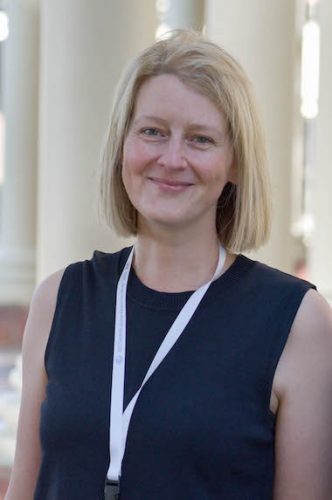
Susan is the co-founder of Innovators Magazine and a consultant for OnePoint5Media. Susan is also a member of the UNFCCC-led Resilience Frontiers Nexus group.